F E S T I V A L / FEST-212
Jōshū Shirokubo Tea Lecture (Ochakō)
上州白久保のお茶講じょうしゅうしろくぼのおちゃこう
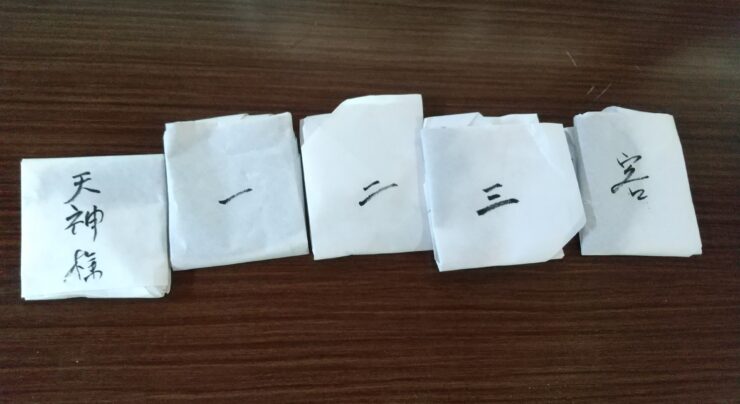
The Jōshū Shirokubo Ochakō is a rite held every February 24 at the 'Ochakō House' in Gotanda, Nakanojo, Gunma Prefecture, and it preserves in vivid form the medieval game of tōcha — competitive tea-tasting. Designated a National Important Intangible Folk Cultural Property in 1990, it involves roasting bitter (sencha) tea, sweet tea (amacha), and dried mandarin peel (chinpi) in an earthenware pan, grinding them to powder, and blending them in varying ratios into four teas: 'Ichi-no-cha,' 'Ni-no-cha,' 'San-no-cha,' and 'Kyaku' (guest). Participants are given codenames such as 'flower, bird, wind, moon' rather than their own names, and must identify each of seven cups served in random order. A year with many perfect scorers, or conversely many who get none right, is said to portend a good harvest, so the contest itself functions as a kind of annual divination. The same record-keeping method as the 'Ocha-kō Notebook' of 1799 (Kansei 11) is still in use, making this a living fossil of tōcha.
H I G H L I G H T S
Highlights
- 01Identifying four blended teas (Ichi-no-cha, Ni-no-cha, San-no-cha, and Kyaku) made by roasting and powdering bitter tea, sweet tea, and dried mandarin peel
- 02The medieval tōcha practice in which participants are called by codes like 'flower, bird, wind, moon' and taste seven cups to name each blend
- 03An 'annual divination' aspect: both a year of many perfect scorers and a year when almost no one is correct are read as signs of a good harvest
- 04A living fossil of tōcha, transmitting the same record-keeping method as in 1799 (Kansei 11)
D E E P D I V E