F E S T I V A L / FEST-199
Shinmeigū Aburimochi Shinji (Roasted-Mochi Rite)
神明宮 あぶりもち神事しんめいぐう あぶりもちしんじ
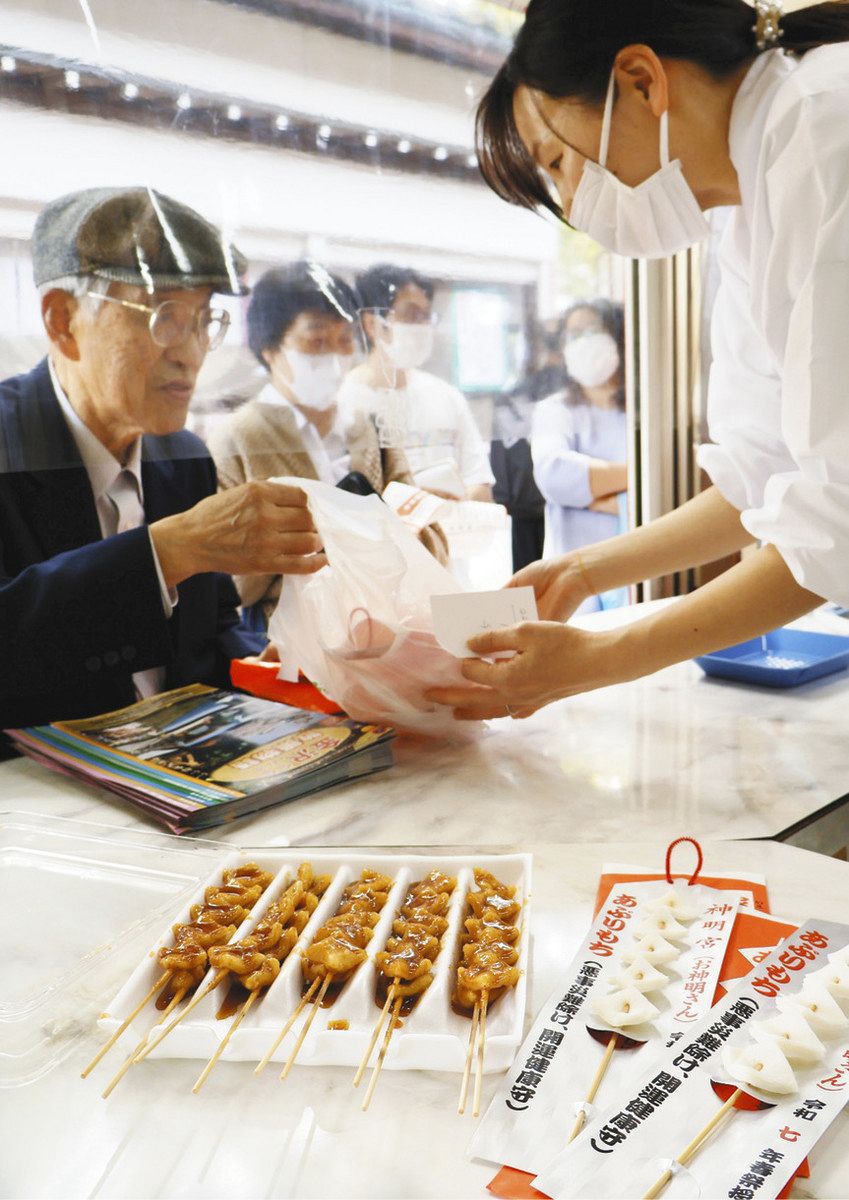
The Aburimochi Shinji is a special exorcistic rite — said to be the only one of its kind in Japan — held twice a year, in spring and autumn, at Shinmeigū, one of Kanazawa's five old shrines and long known as the "Shrine of Purification." Small mochi skewered into the shape of a gohei (the paper-and-stick wand used in Shinto purification) are roasted over a sacred fire; eating them is said to let one escape a year's worth of misfortune, calamity, and ill fortune. The gohei-shaped mochi imitates the nusa wand used to absorb impurity in purification rites, and the act of cleansing it with fire and taking it into the body concentrates the folk logic of avoidance and purification into a familiar offering of rice cake. With a history of more than three hundred years, the rite is said to have been encouraged as an exorcistic ceremony by Maeda Toshinaga, the second lord of the Kaga domain. In the precincts towers a great zelkova said to be about a thousand years old, designated Kanazawa's Preserved Tree No. 1.
H I G H L I G H T S
Highlights
- 01An "edible charm": mochi skewered into the shape of a purification wand (nusa), roasted over sacred fire and eaten to ward off a year's misfortune
- 02A special exorcistic rite said to be the only one of its kind in Japan, held twice yearly over three days each in spring and autumn
- 03A pedigree of patronage by the Maeda lords of the Kaga domain, and a roughly thousand-year-old great zelkova towering in the precincts
D E E P D I V E