F E S T I V A L / FEST-188
Shanshan-uma Dōchū (Bell Horse Bridal Pilgrimage Procession)
シャンシャン馬道中しゃんしゃんうまどうちゅう
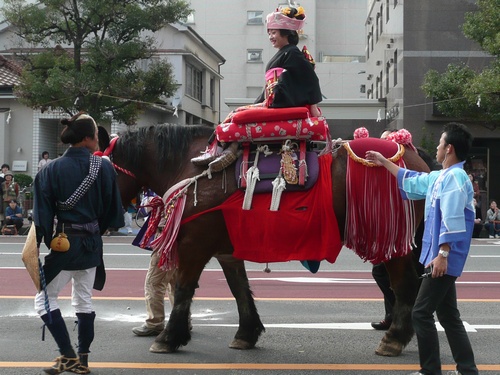
Shanshan-uma is a folk reenactment at Udo-jingū Shrine on Miyazaki Prefecture's Nichinan coast that revives a vanished newlywed pilgrimage. From the mid-Edo period until the close of the Meiji era, a newly married couple would dress the bride in formal kimono and seat her atop a horse decked out in vivid vermilion ornamental saddlery, tassels, and neck bells, while the groom led the animal on foot from the Aoshima area over the rugged coastal trail known as the 'Seven Bays and Seven Passes' (nanaura-nanatōge) to worship at Udo-jingū, a shrine revered for safe childbirth and matchmaking. The name 'shanshan' is onomatopoeia for the jingling of the bells hung at the horse's neck, and the spectacle itself — bride in wedding finery atop a bell-bedecked, tasseled horse — is the visual heart of the event. Though the custom died out with modernization, today the procession is recreated as a tourism event each spring, staged alongside the finals of the Shanshan-uma Dōchū-uta National Folk-Song Competition during Udo-jingū's spring grand festival, bringing the old bridal pilgrimage briefly back to life.
H I G H L I G H T S
Highlights
- 01A bridal procession in full wedding costume: a bride in formal kimono riding side-saddle on a horse adorned with neck bells, a vermilion ornamental saddle, and dangling tassels
- 02A reenactment of the pre-Meiji newlywed pilgrimage, with the groom (rein-handler) and attendants leading the horse on foot
- 03The journey motif of crossing the formidable Nichinan coastal trail — the 'Seven Bays and Seven Passes' — to reach Udo-jingū
- 04An event built around the folk song 'Shanshan-uma Dōchū-uta,' named for the very 'shanshan' jingle of the bells, paired with its national competition
D E E P D I V E