F E S T I V A L / FEST-110
Takachiho Shrine Tanada Kagura
高千穂神社 棚田神楽たかちほじんじゃ たなだかぐら
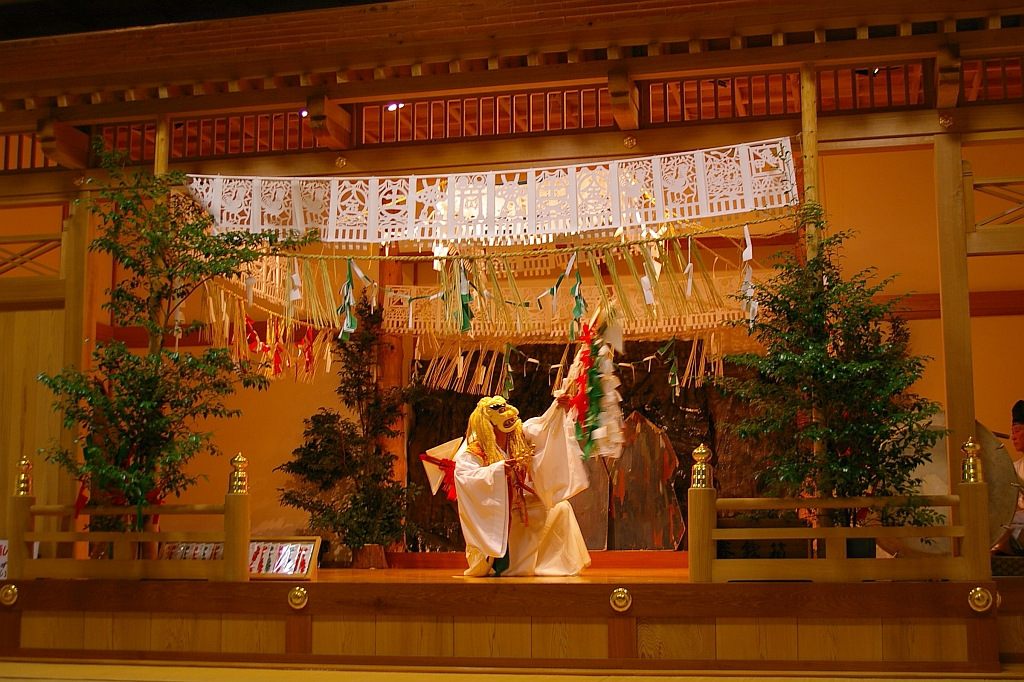
On a single evening in early March, the village of Takachiho — long understood within the Kojiki as the place of descent of the imperial ancestor Ninigi-no-Mikoto — hosts a specialized open-air performance of its winter night-kagura on the terraced rice fields. Where the traditional yokagura cycle is performed across more than twenty hamlets from late autumn through February inside private dwellings designated as 'kagura inns,' the Tanada Kagura takes the same masked liturgical dance into the cold air of the terraces, surrounded by stone-bermed paddies awaiting spring planting. Bonfires are lit along the ridges, and the central episodes of the Iwato cycle — Totori, Tajikarao, and the opening of the cave of heaven — are performed to flute and drum. Inscribed as an Important Intangible Folk Cultural Property in 1978, Takachiho's kagura is among the most thoroughly studied of Japan's surviving Shugendō-influenced ritual dance traditions, and the open-air spring performance places it in direct relation to the mythological landscape that gave rise to it.
H I G H L I G H T S
Highlights
- 01Terraced fields as ritual stage: the kagura is performed on the unplanted paddies in the dark of early March, with bonfires lining the stone bunds
- 02The opening of the heavenly rock cave: the climactic dances of Totori and Tajikarao, in which the cave is forced open and Amaterasu drawn forth, are among the most physically dramatic in the cycle
- 03Highland night and star fields: the absence of light pollution in the Takachiho gorge allows the kagura to be seen against an exceptionally clear winter sky