F E S T I V A L / FEST-098
Masumida Shrine Tōka-sai (Peach Blossom Festival)
真清田神社 桃花祭ますみだじんじゃ とうかさい
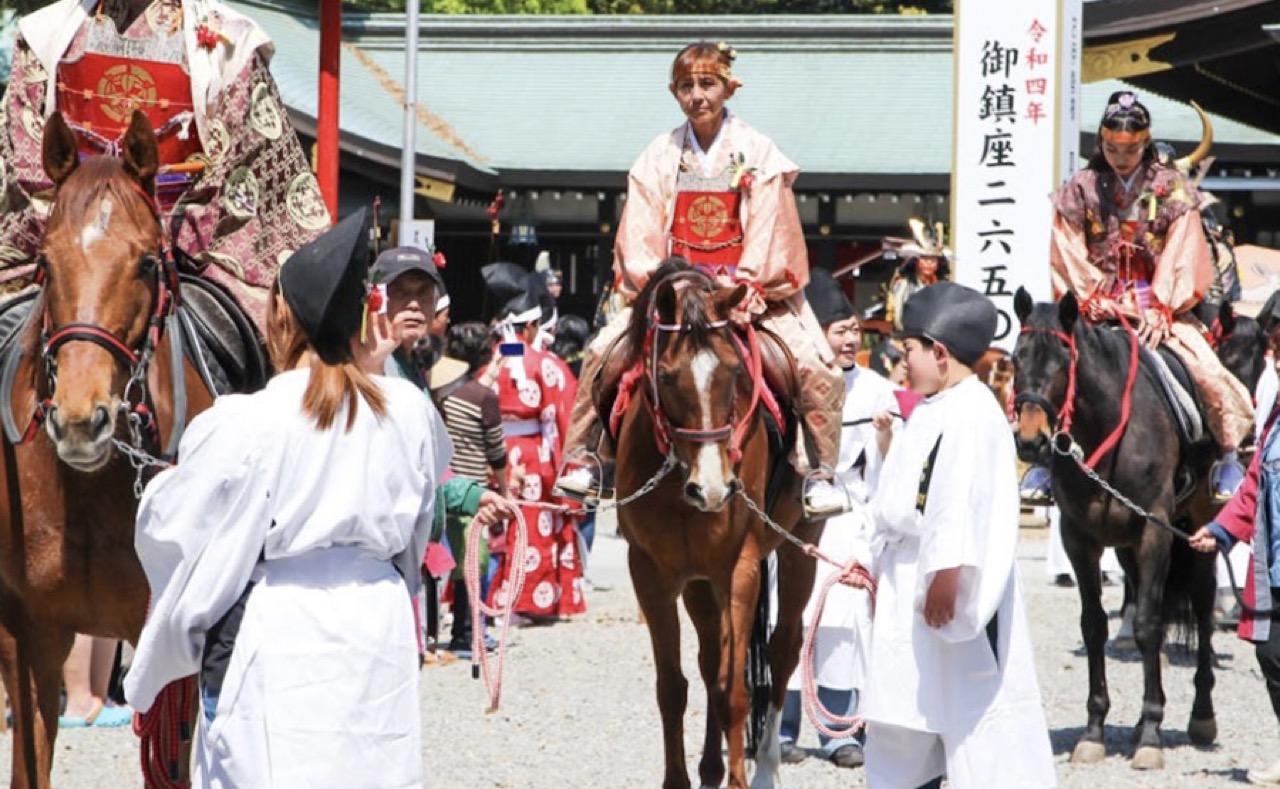
Masumida Shrine in Ichinomiya City is the ichinomiya (principal shrine) of Owari Province — the foremost tutelary shrine of the historical territory corresponding to the western half of modern Aichi Prefecture — a status confirmed by its entry as a Myōjin Taisha (great deity shrine) in the Engishiki (927 CE). Its Grand Festival, the Tōka-sai, was traditionally held on the third day of the third lunar month (the Momo-no-Sekku, Peach Festival) — a date that in ancient East Asian practice had identified the peach blossom as an agent of purification and evil-warding. Transferred to the fixed date of April 3rd following the adoption of the solar calendar in Meiji 43 (1910), the festival now spans three days. The climax is the procession of approximately thirty Uma-no-Tō (Tower Horses) — magnificently decorated horses, each bearing ritual paraphernalia including votive streamers and figural ornaments, and led by a woman in samurai warrior costume (onna-musha) — through the streets of Ichinomiya, combined with a yabusame (mounted archery) ceremony on the shrine grounds and a sacred rite (Hosha Shinji) on April 2nd in which the fall pattern of arrows is used to divine the year's harvest prospects. April 1st's Tanzaku-sai involves the offering of waka poetry. The horse procession and yabusame reflect the medieval heritage of horse-cult practice in Owari — a tradition shared with neighboring Tsushima Shrine and Atsuta Shrine — while the April 3rd date continues to identify the ceremony with the original logic of the Momo-no-Sekku: peach-power purification, expressed now through martial magnificence rather than plant symbolism.
H I G H L I G H T S
Highlights
- 01Approximately thirty Uma-no-Tō (Tower Horses) magnificently decorated with ritual ornaments proceed through the city of Ichinomiya led by a woman in samurai costume — a visual display that encodes the medieval horse-cult heritage of Owari Province in processional form and gives the Tōka-sai its popular designation as the 'Horse Festival.'
- 02The Hosha Shinji (Walking Archery Ceremony) on April 2nd — in which the fall pattern of arrows is read as an agricultural oracle — maintains the divination function of the Momo-no-Sekku in its original form, connecting the festival's April 3rd climax to an ancient East Asian calendrical practice of using the third month to determine the year's fortunes.
- 03Masumida Shrine's status as the Owari ichinomiya (principal provincial shrine) gives the Tōka-sai a territorial significance reaching back to the Heian Period; the festival has been the principal sacred observance of western Aichi for over a millennium, maintaining ceremonial continuity through medieval warfare, Meiji-era calendar reform, and into the present.
D E E P D I V E