F E S T I V A L / FEST-095
Yokote Snow Festival (Kamakura)
横手の雪まつり(かまくら)よこてのゆきまつり(かまくら)
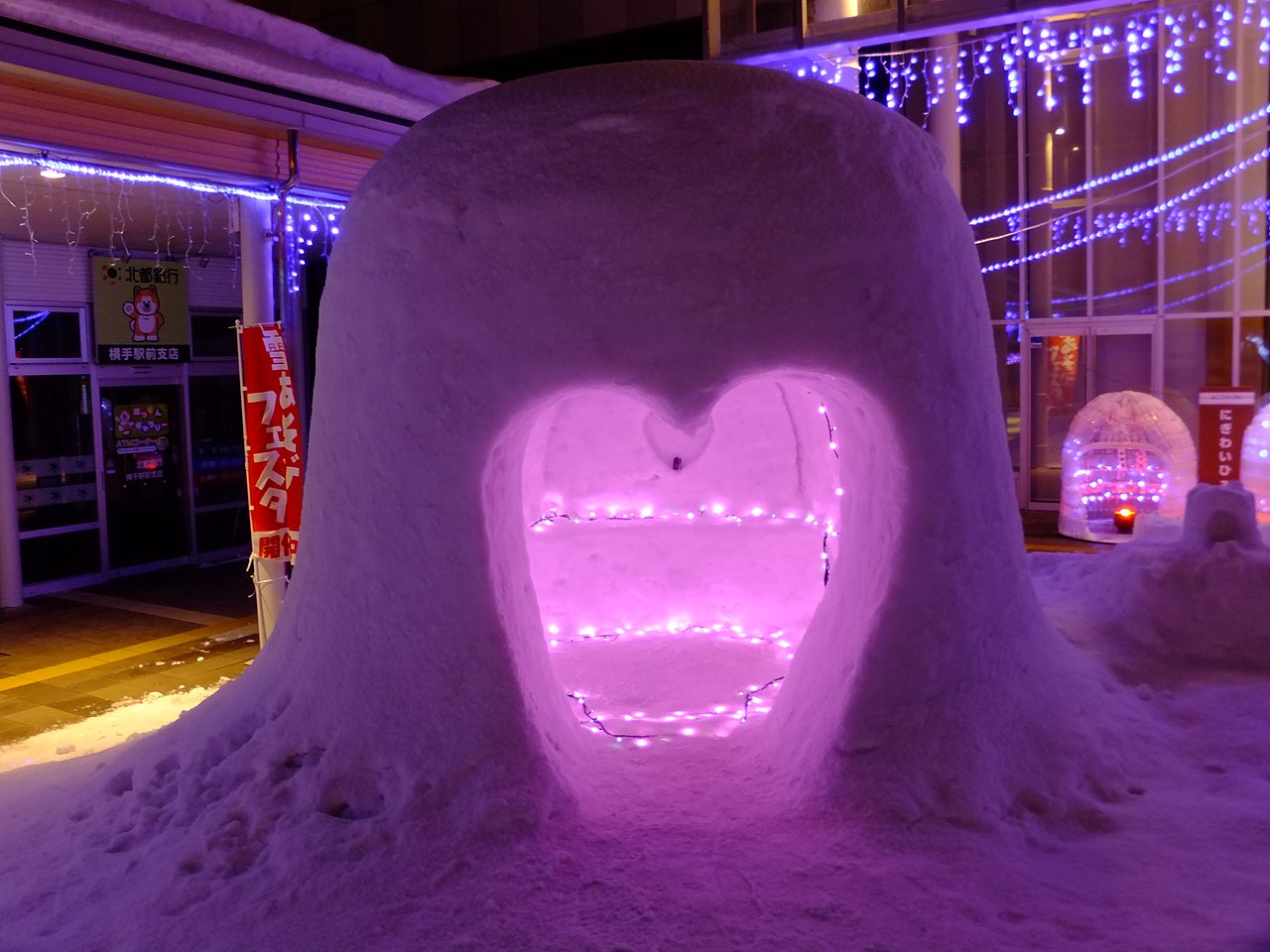
For approximately 450 years, the residents of Yokote in the snowbelt of southern Akita Prefecture have marked the small-month observance of the water deity (Mizugami) by constructing domed snow chambers (kamakura) in the streets and open grounds of the city. Within each kamakura, a small altar to the Kamakura Daimyōjin (the water kami) is established; children in traditional dress sit inside and call to passers-by — 'haitte, tanse' (please come in) — offering mochi (rice cakes) and amazake (sweet fermented rice drink) to those who enter. The kamakura are built across several principal sites: the plaza in front of Yokote City Hall, Yokote Park, and Janokizaki Kawara riverbank, where large-scale domed snow chambers accommodate multiple visitors simultaneously. Separately, the streets around Yokote Minami Elementary School are lined with hundreds of small tea-light-illuminated mini-kamakura built by residents, creating at night a field of glowing snow lanterns whose effect is quiet, intimate, and difficult to reproduce. The kamakura tradition is understood by folklorists as an unusually preserved instance of the interior-type small-month rite — a snow structure containing a sacred altar, in a country where most equivalent ceremonies involve outdoor fires. From 2026, the festival dates have been adjusted to align with the Bonten Festival at Asahiokayama Shrine, enabling combined itinerary planning.
H I G H L I G H T S
Highlights
- 01The snow chambers themselves — dome-shaped, each containing an altar to the water kami with children as ritual hosts who offer amazake and mochi to visitors — embody a 450-year-old form of Mizugami veneration that is classified as exceptional even among Japan's snow-country small-month traditions.
- 02The mini-kamakura fields near Yokote Minami Elementary School, lit from within by candles or electric lights, produce an atmosphere of communal artisanal devotion unlike the main large-structure sites — hundreds of small glowing forms stretching through winter streets, built by ordinary residents rather than by official ceremony.
- 03The kamakura tradition is considered the historical prototype from which later snow-chamber festivals in southern Akita (Yuzawa, Rokugo, Karumai) derived; observing the Yokote ceremony is to see the original form of what became a regional folk religious genre.
D E E P D I V E