F E S T I V A L / FEST-073
Kiraikyō — Demon-Visitation Hell Drama (Kōsaiji Temple)
鬼来迎(広済寺の鬼舞)きらいごう(こうさいじのおにまい)
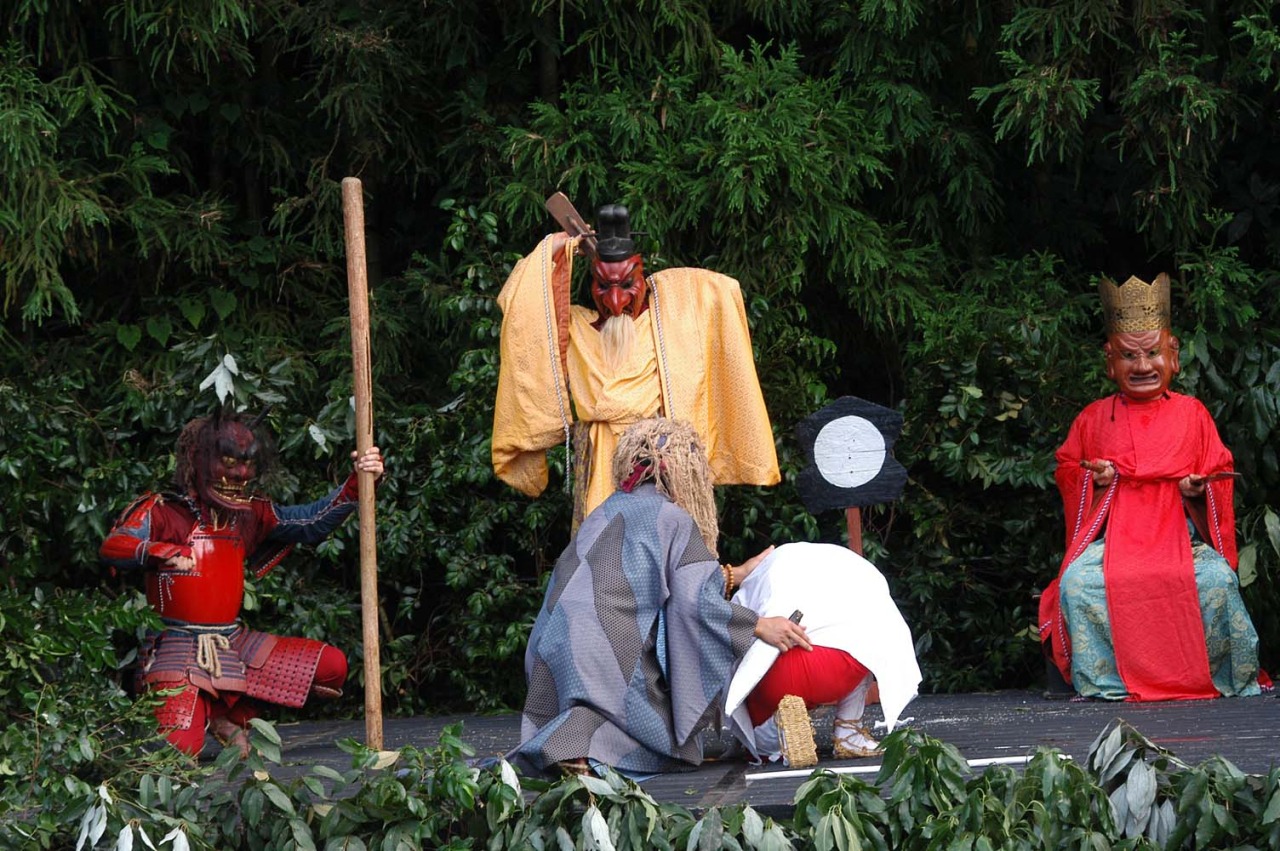
At Kōsaiji temple in the village of Mushū in Chiba Prefecture — a temple said to have been founded in the Kamakura period — a masked drama has been performed every year on August 16th since at least the early modern period. The Kiraikyō (literally "arrival of demons") is the theatrical visualization of the Buddhist cosmography of hell and salvation: performers from the Mushū community and temple parish families don masks and elaborate costumes to become the demons of hell, the King of Hell (Enma-ō), the tormented souls of the dead, the Bodhisattva Jizō, and the Bodhisattva Kannon, enacting across seven dramatic episodes the moral logic of karmic retribution and the liberating intervention of Buddhist compassion. The date — August 16th — is the closing day of the Obon period, the Buddhist festival of the dead, when souls that have returned to the living world for the Bon season depart again. The conjunction of the Segaki-e (a memorial rite for the hungry dead) and the masked hell drama creates a devotional space in which the boundaries between the world of the living, the suffering of hell, and the mercy of the Bodhisattvas are temporarily made visible and traversable. Designated a national Important Intangible Folk Cultural Property in 1975, the Kiraikyō is one of the most complete surviving examples of Buddhist popular didactic performance in Japan — a living edition of the hell-scroll tradition.
H I G H L I G H T S
Highlights
- 01The Kiraikyō's seven-episode dramatic structure — featuring the demons of hell, Enma-ō the King of Hell, the tormented dead, Jizō Bodhisattva, and Kannon Bodhisattva — enacts the full arc of Buddhist moral cosmography in masked performance, making Kōsaiji temple a living illustration of the hell-scroll imagery that shaped Japanese Buddhist devotional culture for centuries.
- 02Performed on August 16th — the closing day of the Obon period — the Kiraikyō occupies a ceremonially charged position in the Buddhist calendar: the moment when the souls of the dead return to the other world, and when the annual Segaki-e rite extends compassion to the hungry dead of all realms.
- 03Designated a national Important Intangible Folk Cultural Property in 1975, the Kiraikyō is transmitted by the lay parishioners and residents of the Mushū district — not by professional performers — preserving a form of community-based Buddhist devotional theater that has largely disappeared elsewhere in Japan.
D E E P D I V E