F E S T I V A L / FEST-213
Niino Snow Festival (Niino no Yuki Matsuri)
新野の雪祭りにいののゆきまつり
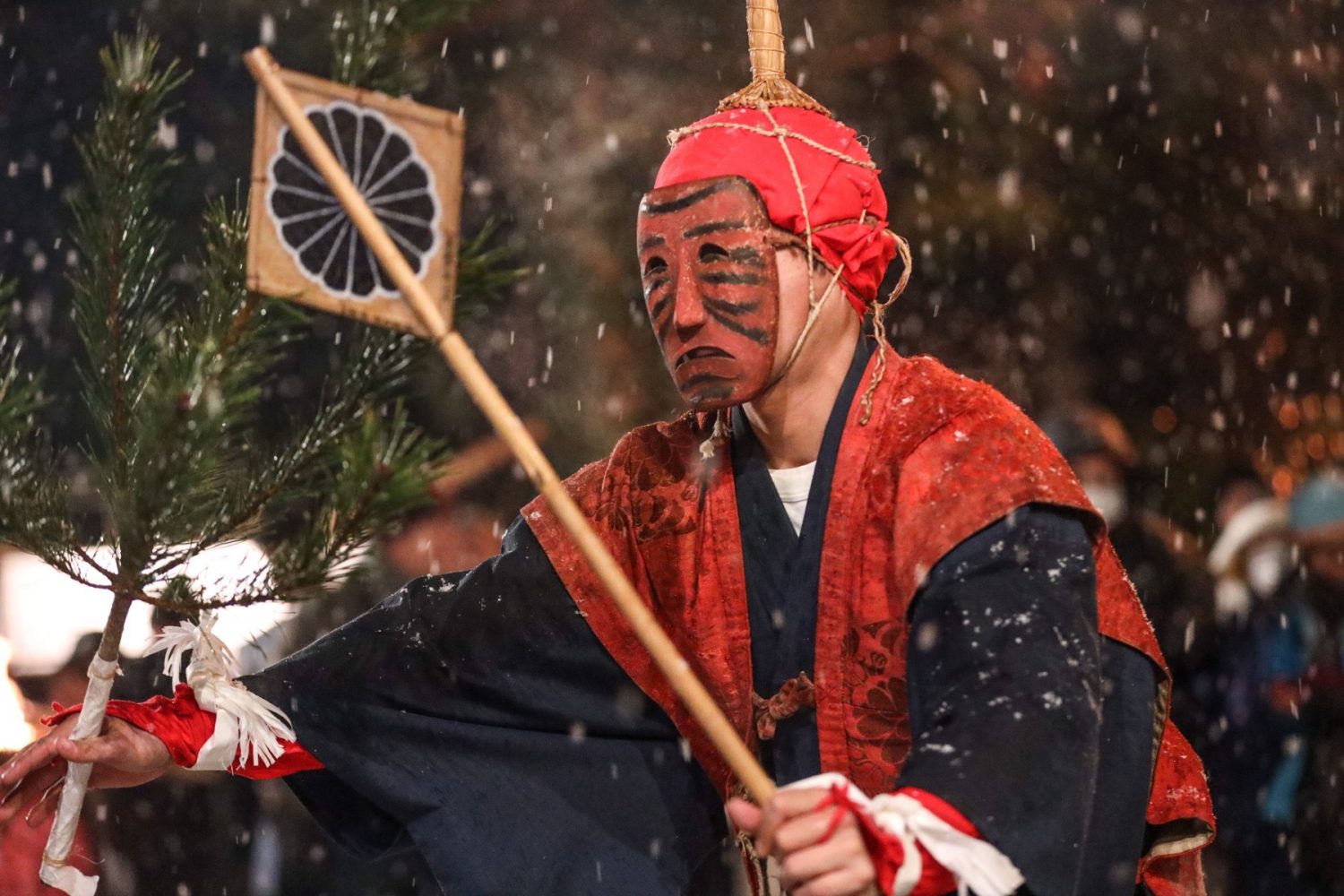
The Niino Snow Festival is an all-night sacred performance held every January 13–15 (morning) centered on Izu Shrine and Suwa Shrine in Niino, Anan, Nagano, and designated a National Important Intangible Folk Cultural Property in 1977 under the name 'Yuki-matsuri.' Treating snow as an auspicious omen of a bountiful year, it prays for an abundant harvest; the main rite runs through the night of the 14th into the next morning in the precincts of Izu Shrine. Parishioners wearing plain masks (omote-gata, currently 19 types) finished with only ink, white pigment, and red ochre become embodiments of the gods, offering varied numbers such as the supreme deity 'Saihō,' plus Keiba, Motoki, Matsukage, Tengu, Hachiman, Modoki, and Ta-asobi in movements descended from dengaku, bugaku, kagura, and sarugaku. Said to date to the late Kamakura period, it vividly preserves the archaic form of dengaku and medieval performing arts and is of immense value to performance history. Known as the 'sleepy, smoky, cold festival,' its scene of masked gods emerging by torchlight amid falling snow in the dark precincts is overwhelming.
H I G H L I G H T S
Highlights
- 01Masked gods appearing one after another, wearing plain masks (currently 19 types) finished only with ink, white pigment, and red ochre
- 02The supreme deity 'Saihō' dancing with pine and fan — an otherworldly performance in the snow-filled precincts
- 03An all-night rite from the night of the 14th to the morning of the 15th, with dengaku, bugaku, kagura, and sarugaku continuing through the night
- 04A 'snow divination' character treating snow as an omen of harvest, plus the archaic form of medieval performing arts reaching back to the Kamakura period
D E E P D I V E