F E S T I V A L / FEST-194
Tsuruoka Tenjin Festival 'Bakemono Matsuri' (Monster Festival)
鶴岡天神祭 化けものまつりつるおかてんじんさい ばけものまつり
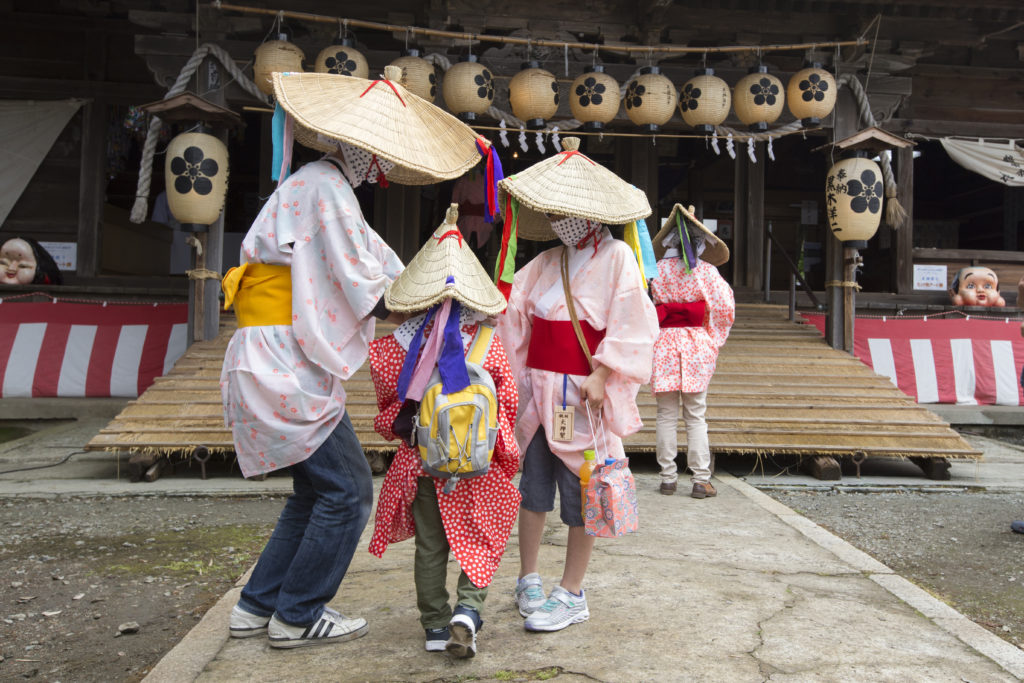
A rite of Tsuruoka Tenmangu Shrine in Tsuruoka City, Yamagata, with the main day held every May 25th. Although it is a Tenjin festival honoring Sugawara no Michizane, the god of learning, it is a disguise festival rare even nationwide: participants called 'bakemono' (monsters) tie a sash over flamboyant floral-patterned undergarments and hide their faces with a hand towel and a woven sedge hat, then, holding a cup and a sake flask, silently pour drinks for passersby. It is said that if one can complete the pilgrimage in bakemono guise for three years without anyone recognizing them, their wish will come true. A cherished sign of early summer in the Shonai region dating to the Edo period, the spectacle of bakemono parading through the city center is sometimes dubbed a 'Heian-era Halloween.' It is a Yamagata Prefecture–designated intangible folk cultural property.
H I G H L I G H T S
Highlights
- 01The disguised spectacle of 'bakemono' in floral undergarments, woven hats, and hand towels silently pouring sake for passersby
- 02An uncanny parade of participants who conceal even their gender and identity as they walk through the city center
- 03The distinctive structure of a rite to the scholar-god Tenjin fused with a culture of disguise
D E E P D I V E
Deep Dive
Local Perspective
Local Perspective
Participation as a 'bakemono' is open not only to locals but to visitors, and there are services that rent out the long undergarments and help people dress. The sight of people of all ages disguised as bakemono across the city center, silently pouring sake for one another, is cherished as a sign of early summer in the Shonai region and Tsuruoka. Press reports each year describe the bakemono parading through downtown on the main day amid lively crowds, and the festival balances cross-generational local participation with tourism. Because the etiquette forbids revealing one's identity, a loose, anonymous solidarity arises in which participants do not pry into one another — lending the local festival its own distinctive atmosphere.