F E S T I V A L / FEST-187
Takinomiya no Nenbutsu Odori (Takinomiya Nenbutsu Dance)
滝宮の念仏踊たきのみやのねんぶつおどり
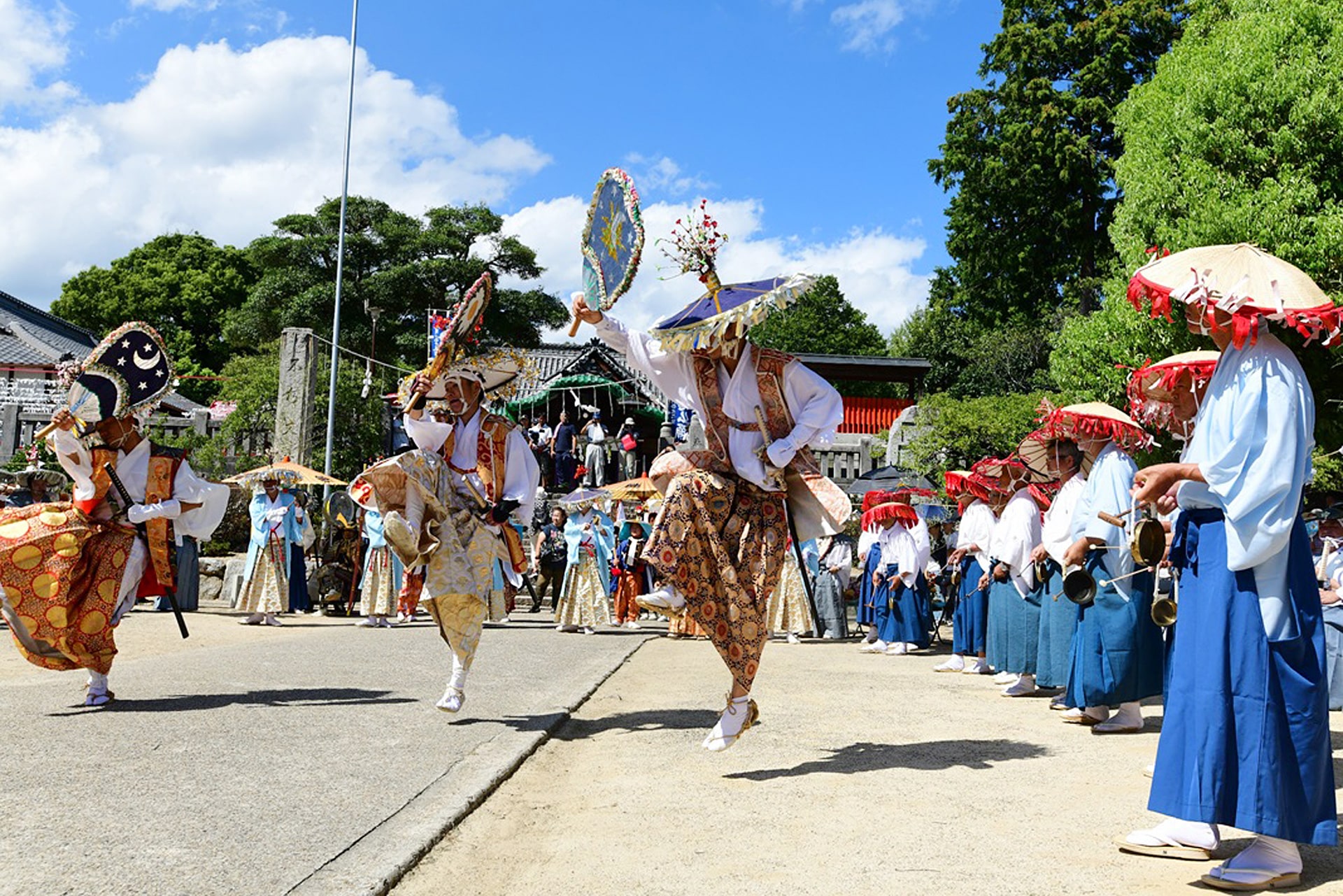
The Takinomiya Nenbutsu Odori is a rain-prayer dance handed down in the Takinomiya district of Ayagawa Town, Kagawa Prefecture. Designated a National Important Intangible Folk Cultural Property in 1977, it was inscribed on UNESCO's Representative List of the Intangible Cultural Heritage of Humanity in 2022 as one of the forty-one folk performing arts that make up the "Furyu-odori." By tradition, when the scholar-official Sugawara no Michizane served as provincial governor of Sanuki, a severe drought struck the region; he prayed for rain, and when the rains finally came, the grateful farmers danced in thanksgiving before the shrine. Later the priest Honen, exiled to Sanuki, is said to have woven the Buddhist invocation into the dance, giving it its present "nenbutsu" form. On the festival day in late August, the dance is offered first at Takinomiya Shrine in the morning and then carried to nearby Takinomiya Tenmangu. To the clatter of gongs and the beat of drums, dancers in jinbaori vests and hakama leap and whirl, chanting "Namu Amidoya" while brandishing huge, ornately decorated fans (oo-uchiwa). Today eleven dance troupes from around the town preserve the tradition, performing in rotation — three groups each year, with all eleven joining together every fifth year for a grand combined dance. Regarded as one of the wellsprings of the nenbutsu and bon dances found across Japan, it is a deeply archaic folk rite where faith and performance intersect.
H I G H L I G H T S
Highlights
- 01Dancers in jinbaori vests and hakama leap and whirl while brandishing enormous fans (oo-uchiwa) decorated with silver foil and tassels — a strikingly distinctive movement
- 02An archaic structure in which dance and Buddhist devotion fuse, as performers chant "Namu Amidoya" in time with clashing gongs and drums
- 03An entry procession in which tall banners inscribed with "Namu Amida Butsu" are marched into the shrine precincts
- 04A community-wide transmission system: eleven troupes perform in rotation, with all of them uniting for a grand combined dance once every five years
- 05Historical significance as a presumed source of the nenbutsu dance tradition and a constituent of the UNESCO-listed "Furyu-odori"
D E E P D I V E
Deep Dive
R E F E R E N C E