F E S T I V A L / FEST-181
Mizuumi no Dengaku Nomai
水海の田楽能舞みずうみのでんがくのうまい
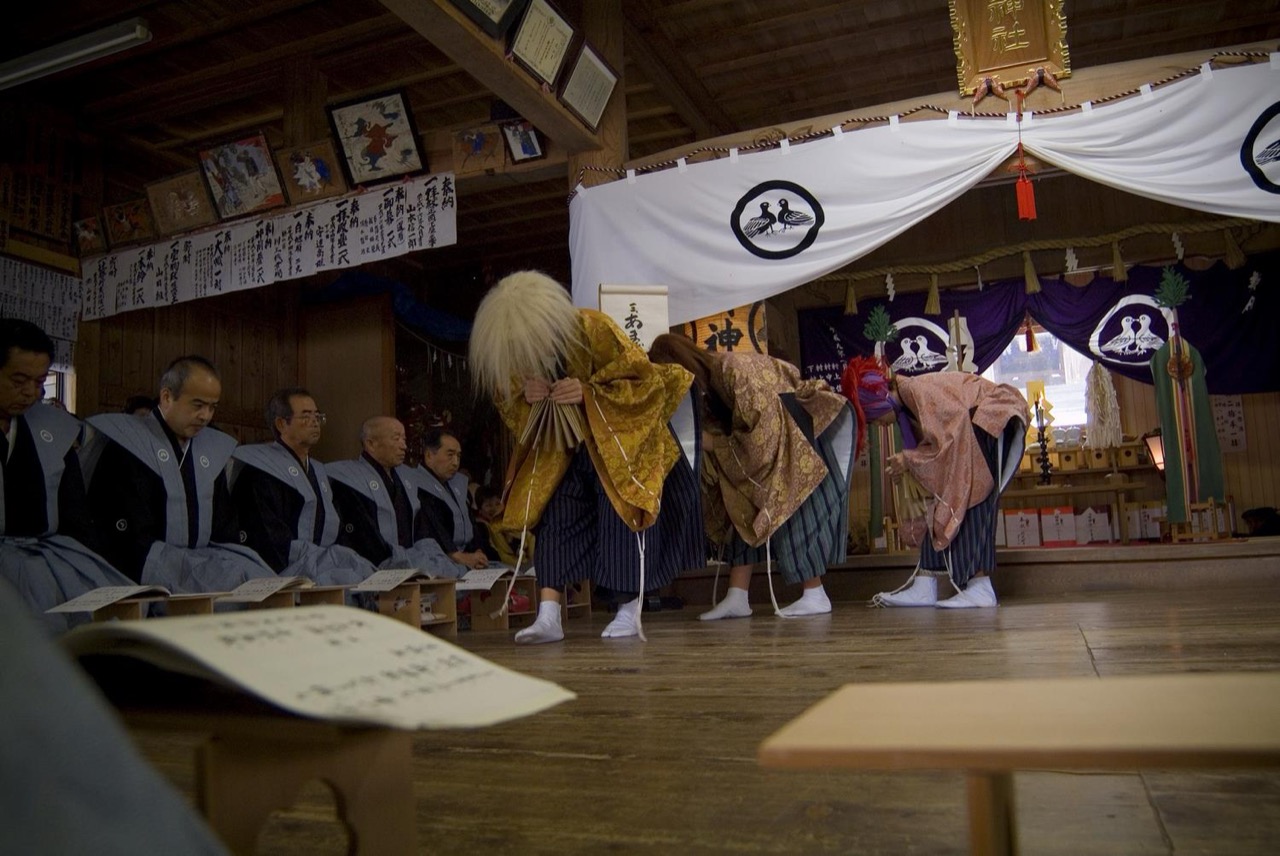
Mizuumi no Dengaku Nomai is a folk performing art handed down at Ukkan Shrine in the Mizuumi district of Ikeda Town, Fukui Prefecture. It is dedicated each year on February 15 during the shrine's spring festival, performed on the worship hall as a stage. Its distinguishing feature is that archaic dengaku and later noh dances are performed in sequence within a single ritual, making it a rare surviving case where the two coexist and a valuable subject in the history of Japanese performing arts. According to local legend, around the Kencho era (circa 1250) of the Kamakura period, the regent Hojo Tokiyori was stranded by snow in Ikeda and wintered in Mizuumi; villagers entertained him with dengaku, and in return he taught them noh, giving rise to this combined tradition. The program comprises four dengaku numbers (such as Karasutobi, Notto, Amanjagoko and Ama) followed by five noh numbers (Shikisanban, Takasago, Tamura, Kureha and Rashomon), performed over roughly half a day according to old custom. Selected as an intangible cultural property in 1953 and designated an Important Intangible Folk Cultural Property on May 4, 1976, it was the first such designation in Fukui Prefecture. The performers begin a period of ritual abstinence on February 13 and purify themselves in the cold waters of the Mizuumi River on the morning of the festival.
H I G H L I G H T S
Highlights
- 01A rare coexistence of archaic dengaku and later noh dances performed in sequence within one ritual, notable in the history of Japanese performing arts
- 02Four dengaku numbers (Karasutobi, Notto, Amanjagoko, Ama) followed by five noh numbers (Shikisanban, Takasago, Tamura, Kureha, Rashomon) over about half a day
- 03A Kamakura-era origin legend recalling regent Hojo Tokiyori stranded here by snow
- 04Designated in 1976 as Fukui Prefecture's first Important Intangible Folk Cultural Property
- 05Strict ritual purity: performers begin abstinence on February 13 and bathe in the cold Mizuumi River on the festival morning
D E E P D I V E