F E S T I V A L / FEST-178
Arai Festival (Daikon-Throwing Festival)
あらい祭(大根まつり)あらいまつり
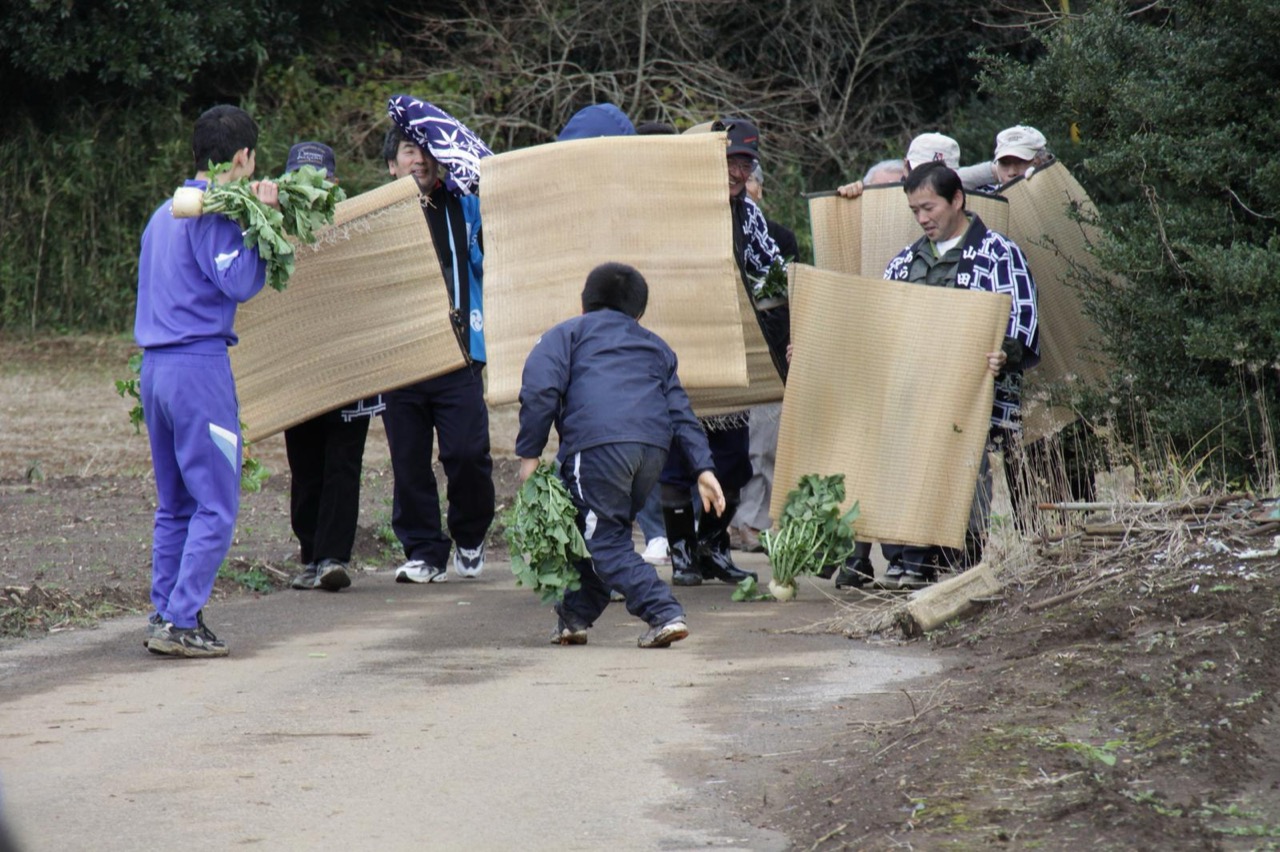
Held at Omiya Shrine in the Yamada district of Shibayama, Chiba Prefecture, the Arai Festival—also called the "Daikon (radish) Festival"—is an annual folk rite fixed to December 14. According to records kept by the town of Shibayama, it began around 1849–1850, when a traveling monk who heard that the village children were sickly advised the community to hold a ritual praying for good health, protection from fire and theft, abundant harvests, and family prosperity. On the day of the festival, households keep the custom of "nabe-kakezu," lighting no fire in their hearths and instead gathering at a designated host home to share a sacred meal. A lion dance is performed to invoke health and the prospering of descendants, with male and female "sacred objects" set on the altar. Meanwhile, about a month in advance, the children gather reeds and build a bamboo-framed hut; on the day itself they set it ablaze and pelt the shrine priest with daikon radishes to block him from entering through the front of the shrine. This striking act of children throwing radishes at the priest has earned it a reputation as one of Chiba's "strange festivals," while also serving as a local coming-of-age and child-blessing occasion meant to toughen children against the winter cold.
H I G H L I G H T S
Highlights
- 01Children pelt the shrine priest with daikon radishes to keep him from entering the shrine's front entrance
- 02A reed-and-bamboo hut, built by children about a month beforehand, is set ablaze on the day
- 03The 'nabe-kakezu' custom of lighting no household hearth fires, with a shared sacred meal at a host home
- 04A lion dance and male/female 'sacred objects' invoking health and the prospering of descendants
- 05A tradition said to date back to a monk's teaching around 1849, continued for more than 160 years
D E E P D I V E