F E S T I V A L / FEST-173
Sada Shin-noh
佐陀神能さだしんのう
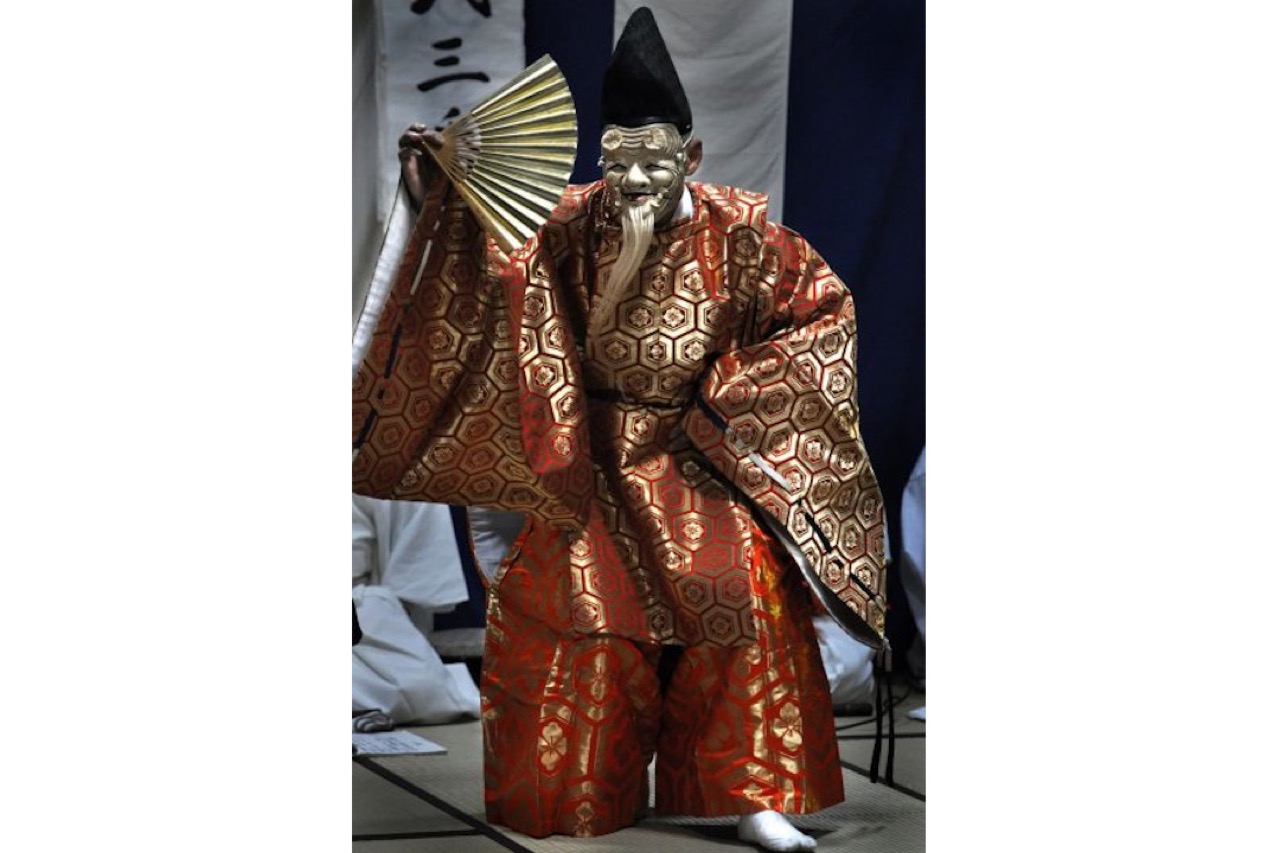
Sada Shin-noh is a sacred performing art dedicated annually on September 24-25 at Sada Shrine in Kashima-cho, Matsue City, Shimane Prefecture, as part of the Gozagae ritual in which the deities' sacred mats are renewed. It consists of three parts: the unmasked Shichiza (seven object dances), the auspicious Shikisanban (modeled on the Noh Okina sequence), and the masked Shin-noh, which dramatizes episodes from Japan's foundational mythology. Tradition holds that the form was established in 1608, when the shrine priest Miyagawa Hideyuki brought Noh techniques from Kyoto and merged them with the local ritual dances. Distinguished from other Izumo kagura by the absence of trance possession and overhead canopy, it is regarded as the origin of the Izumo Kagura tradition. It was designated an Important Intangible Folk Cultural Property in 1976 and inscribed on UNESCO's Intangible Cultural Heritage list in 2011. The Gozagae ritual and Shichiza take place on the night of the 24th, the main festival begins around 3 PM on the 25th, and Shikisanban and Shin-noh are performed before the main hall in the evening. While the shrine grounds are generally open to visitors, viewing arrangements vary by year, so contacting the shrine office in advance is recommended.
H I G H L I G H T S
Highlights
- 01Three-part structure of masked Shin-noh (mythological drama), unmasked Shichiza, and auspicious Shikisanban
- 02Doubly recognized as UNESCO Intangible Cultural Heritage and Japan's Important Intangible Folk Cultural Property
- 03Considered the origin of Izumo Kagura, uniquely adopting Noh techniques into Shinto ritual
- 04Performed alongside the Gozagae ritual on the night of September 24, when the deities' sacred mats are renewed
- 05Staged at the shrine complex featuring three Taisha-zukuri main halls designated as Important Cultural Properties
D E E P D I V E