F E S T I V A L / FEST-072
Hodare Festival (Fertility Deity Procession, Tochio District)
ほだれ祭ほだれまつり
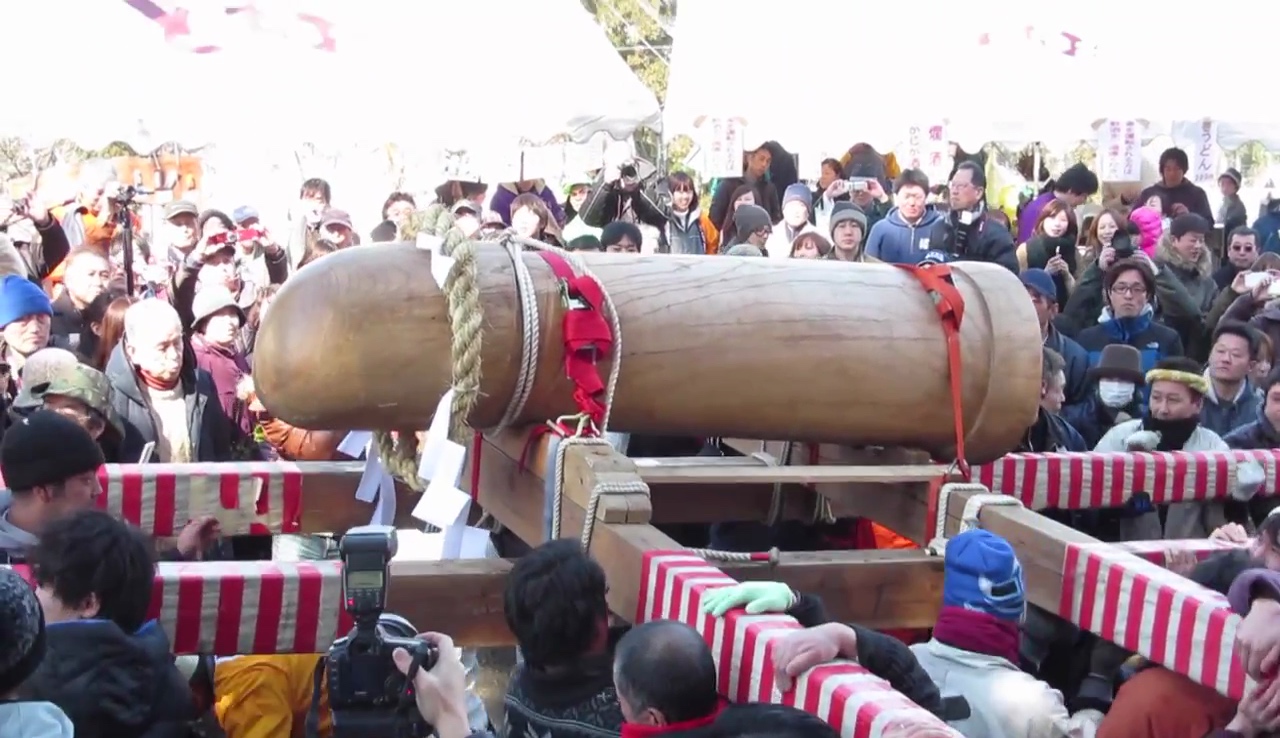
In the mountain village of Shimokuraiden in Nagaoka City — a community in the Echigo highlands once administered as part of Tochio City, a district celebrated for its towering deep-fried tofu and its connection to the warlord Uesugi Kenshin — a phallic deity of extraordinary scale has been enshrined as the community's guardian of agricultural fertility and reproductive blessing since antiquity. According to the Tochio Tourism Association, the Hodare Daijin ("Great Deity of Hanging Rice Ears") takes the form of a phallic road-guardian deity (dōsojin) measuring 2.2 meters in height and weighing approximately 600 kilograms. The name "Hodare" itself encodes the agricultural theology of the cult: the word derives from "ho-dare," the drooping of heavy rice ears under the weight of the autumn harvest — the life force of the ripened grain and the generative power symbolized by the male form fused into a single image. Each year on the second Sunday of March, the Hodare Festival is conducted: a Shintō ceremony followed by the festival's ritual center, the Hatsu-yome Mikoshi — the "First Bride Palanquin" — in which women who have married in the past year ride astride the phallic deity enshrined in a portable palanquin and are carried through the village by bearers, receiving the community's prayer for safe delivery, abundant children, and matrimonial felicity. Rice stalks, sake, mochi rice cakes, and local food are shared in celebration.
H I G H L I G H T S
Highlights
- 01The Hodare Daijin — a phallic dōsojin measuring 2.2 meters in height and 600 kilograms in weight — is among the most physically imposing phallic devotional objects in Japan; its name, encoding the image of drooping rice ears, makes visible the theological fusion of agricultural prayer and reproductive blessing at the heart of Echigo's fertility cult tradition.
- 02The Hatsu-yome Mikoshi — the First Bride Palanquin — in which newly married women ride astride the phallic deity and are carried through the village community, is a direct-contact devotional form of unusual ritual intimacy: the body of the woman, the body of the deity, and the body of the community united in a single procession through deep March snow.
- 03The Hodare Festival represents the Echigo regional expression of Japan's agricultural phallic worship tradition, connecting it to a national lineage that includes the Kanamara Festival in Kawasaki, the Tajinja Hōnen Festival in Aichi, and the Konsei devotional sites of the Tōhoku region — a lineage that the Niigata Tourism Association formally presents as a living element of Japan's folk religious heritage.
D E E P D I V E