F E S T I V A L / FEST-068
Doronko Festival (Mud-Smearing Rite, Wakamiya Hachimangū)
どろんこ祭り(高知・若宮八幡宮)どろんこまつり
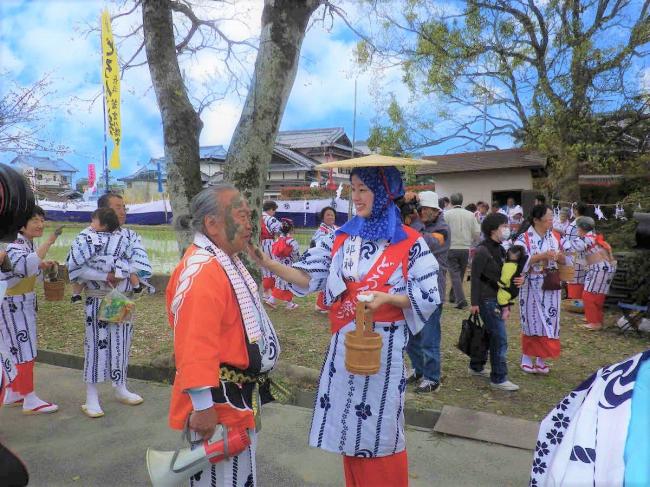
At Wakamiya Hachimangū shrine in the Nagahama district of Kōchi City on the Pacific coast of Shikoku, a spring festival with more than four hundred years of documented history takes place over three days beginning on the first Saturday of April each year. Counted among the three great eccentric festivals of Tosa Province, the Doronko Festival is grounded in a prayer for an abundant harvest and the health of the community through the agricultural year. Its ritual core is arresting in its specificity: women wearing yukata — summer cotton kimono — approach men and smear their faces with mud taken from the rice paddy. According to local tradition, a man whose face has been smeared with the sacred mud will not fall ill that summer. The gesture reverses the usual ceremonial roles of spring agricultural ritual, placing women as the active givers of agricultural blessing and men as its passive recipients. The origins of the festival are disputed: one tradition holds that it began during the tenure of the second Tosa domain lord, Yamauchi Tadayoshi, in the early Edo period; another traces it to the earlier era of the Chōsokabe clan during the Sengoku period. Over the three festival days, yukata-clad women carry the mud-smearing practice from the shrine's precincts outward through Nagahama, to Katsurahama beach, and into central Kōchi City, extending the agricultural blessing across the landscape.
H I G H L I G H T S
Highlights
- 01Women in yukata actively smear the faces of men with rice-field mud as a gift of agricultural blessing — a ritual inversion that places feminine agency at the center of a spring fertility ceremony, making the Doronko Festival ethnographically distinctive among Japan's agricultural rites.
- 02The three-day procession moves from Wakamiya Hachimangū outward through Nagahama, to Katsurahama beach, and into central Kōchi City — the mud-smearing practice spreading across the landscape like a living map of the community's prayer for seasonal renewal.
- 03Counted among the three great eccentric festivals of Tosa Province and supported by the Kōchi City official tourism authority, the festival is a rare surviving example of a female-centered spring agricultural rite that has been maintained continuously for over four hundred years.
D E E P D I V E