F E S T I V A L / FEST-061
Kokusekiji Somin-sai (Winter Naked Festival of Kokuseiji Temple) — Archived
黒石寺蘇民祭こくせきじそみんさい
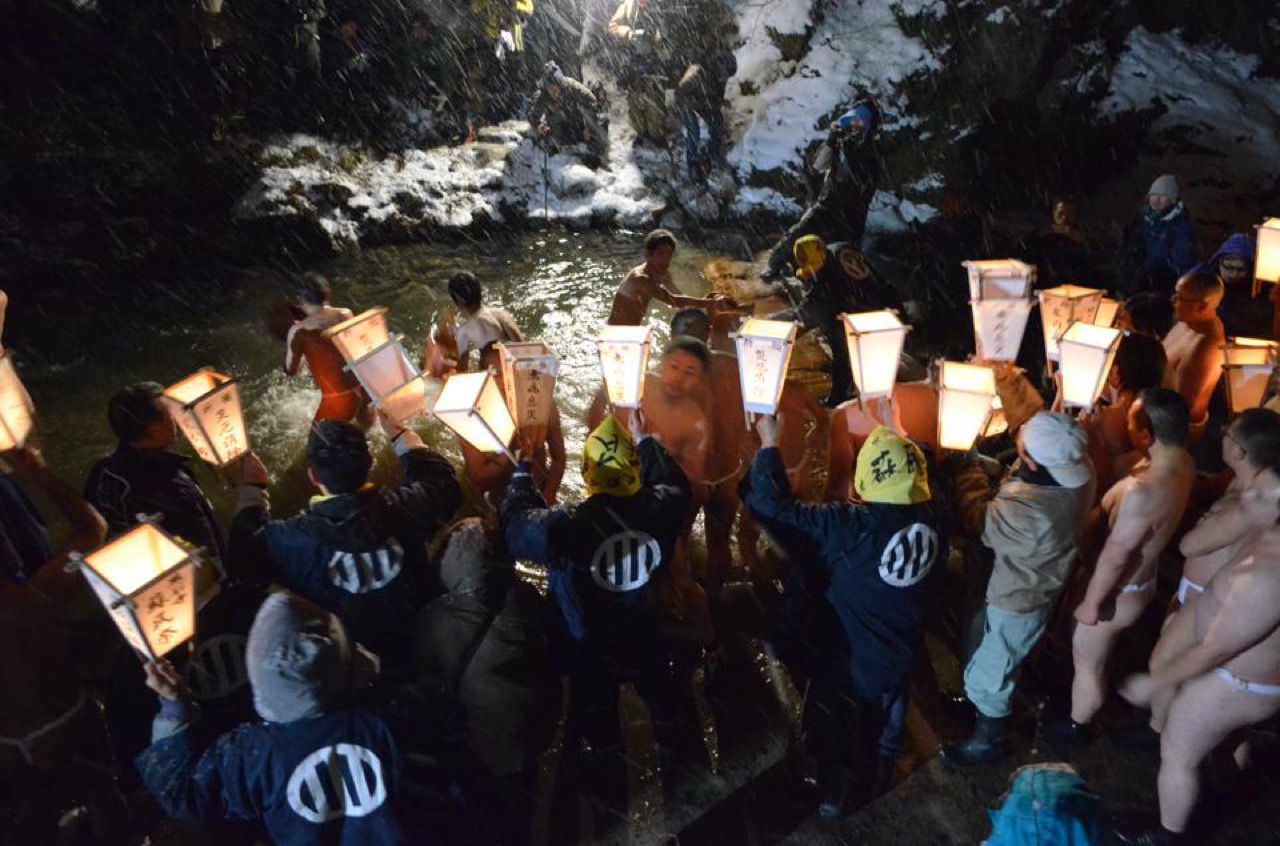
For over a millennium, according to temple tradition and the records of Ōshū City, the Tendai Buddhist temple of Kokusekiji on the outskirts of Mizusawa conducted on the seventh and eighth nights of the first lunar month one of the most physically extreme winter ritual ceremonies in Japan. White-loincloth-clad men — participants who had undergone prior ascetic preparation — moved through the frigid precincts, main hall, and Yakushi hall of the ancient temple in a sequence of continuous ritual acts: the Natsu-mairi sea purification, the Bettō-nobori ascent, the Onigo-nobori ritual, and ultimately the Somin-bukuro sōdatsu-sen — a full-contact group scramble for a sacred protective pouch (somin-bukuro) believed to transmit the protective power of the Somin Shōrai legend, a narrative recorded in the Bingo-no-Kuni Fudoki and among the oldest documented apotropaic folk traditions in Japan. The ceremony is now concluded: Kokusekiji formally announced in 2024 that the festival held on February 17, 2024 would be the last, citing the exhaustion of viable participants due to regional depopulation and ageing. This record is maintained as an archival entry documenting a ceremony of exceptional historical significance, not as an active visitor recommendation.
H I G H L I G H T S
Highlights
- 01The all-night sequence of the Kokusekiji Somin-sai — from sea purification through multiple hall rituals to the physical scramble for the somin-bukuro — constituted one of the most complete surviving enactments of the Somin Shōrai protective legend in Japan, a tradition whose textual roots reach the Nara period.
- 02The ceremony's discontinuation in 2024 following more than a thousand years of unbroken transmission places it among the most significant recent losses in Japan's living intangible cultural heritage; the causes — demographic decline, ageing, loss of community succession — are precisely the structural pressures that ethnographers of intangible heritage have identified as the defining challenge of the twenty-first century.
- 03Kokusekiji itself — founded according to tradition by Gyōki in 729 CE (Tenpyō 1) and revived by the Tendai patriarch Ennin in 849 CE, with a principal image of Yakushi Nyorai designated a National Important Cultural Property — remains open for ordinary temple visits and represents a significant site of Tōhoku Buddhist heritage independent of the festival.
D E E P D I V E