F E S T I V A L / FEST-051
Seki-juku Gion Summer Festival and Seki Float Procession
関宿祇園夏まつり・関の山車せきじゅくぎおんなつまつり・せきのやま
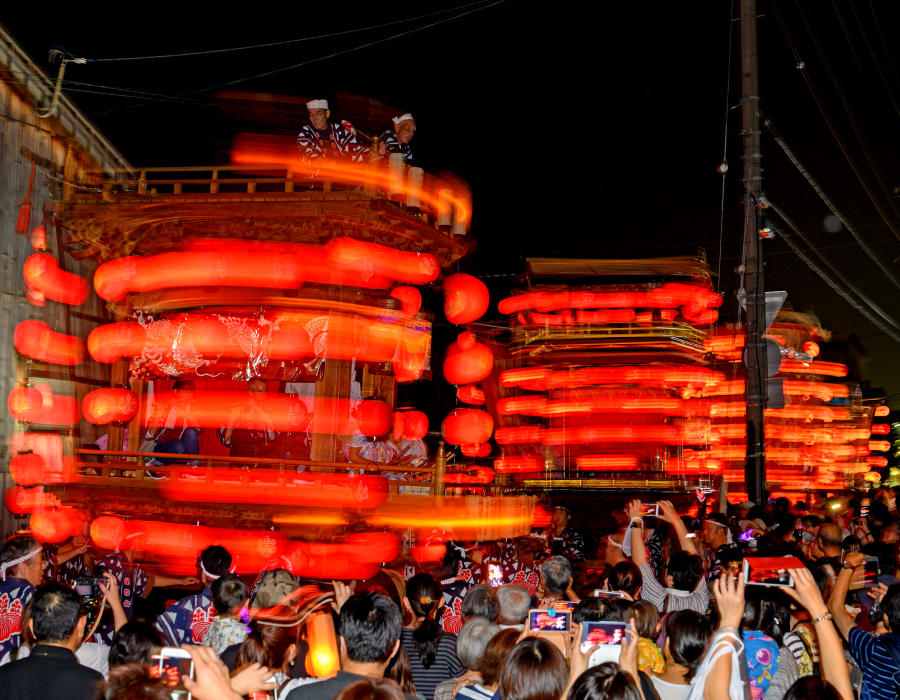
The Seki-juku Gion Festival brings together two of the Tōkaidō's most compelling inheritances: a designated historic post-town streetscape and a living yamaboko float procession with documented roots in the Edo period. The festival is held at Seki Shrine, whose Gion-type matsuri traces the ritual influence of Kyōto's Gion Festival as it radiated eastward along the Tōkaidō highway. Four surviving decorative floats — each designated as a Cultural Property of Kameyama City — travel the narrow former highway of the Seki-juku post town, accompanied by a mikoshi (sacred palanquin) procession. In the Edo period, as many as sixteen floats are said to have filled the post-town road so completely that the congestion gave rise to the expression seki no yama — meaning 'the limit of what is possible' in modern Japanese — a folk etymology that remains the most widely cited explanation of the phrase today. The simultaneous experience of a designated Preservation District of Important Historic Buildings and an active float procession of this antiquity is rare in Japan.
H I G H L I G H T S
Highlights
- 01Four Kameyama City-designated Cultural Property floats processing along the preserved Edo-period streetscape of one of the Tōkaidō's most intact post towns — a conjunction of living ceremony and architectural heritage that few historic districts in Japan can offer.
- 02The folk etymology linking the congested float procession to the origin of the Japanese expression seki no yama ('the absolute limit') gives the festival a linguistic resonance that extends well beyond the local: visitors encounter a phrase used in daily modern Japanese at the very site that, by tradition, generated it.
- 03The mikoshi procession alongside the float circuit creates a layered ritual structure typical of Gion-tradition festivals, in which both the portable deity and the decorative floats fulfill distinct ceremonial functions within the same urban sacred geography.
D E E P D I V E