F E S T I V A L / FEST-049
Kajika Haraso Festival (Ancient Whale Hunt Reenactment)
梶賀ハラソ祭りかじかはらそまつり
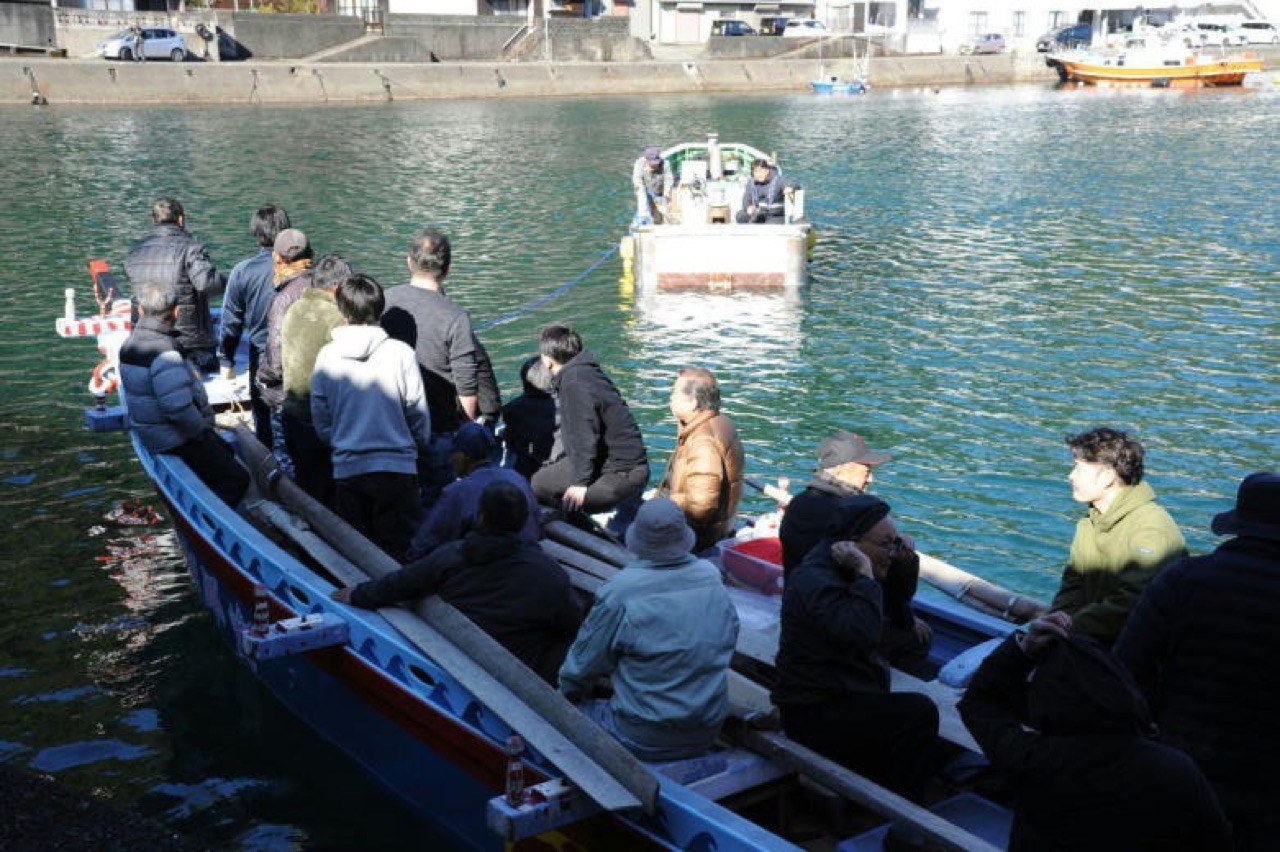
In the small fishing village of Kajika on the Owase coast, a ritual reenactment of early-modern whale hunting has been preserved as one of the most complete surviving expressions of whaling culture in the Kii Peninsula's maritime history. The festival begins with prayers and a memorial service for whales (kujira kuyō) at Jizōji Temple, after which participants board a vessel rigged with eight oars (hachōro) and row toward the Sone fishing grounds, calling out the traditional cry of 'Haraso!' while performing the gestures of harpoon-throwing that their ancestors used in the Edo-period whale hunts. The sequence of eight-oar rowing, harpoon mime, welcome drumming (mukae-daiko), and rice cake offering (mochi-maki) reconstitutes the full ceremonial grammar of a whaling expedition from departure prayer through triumphant return. Local and prefectural cultural authorities document the festival as a living record of the fishermen's heritage of Owase and the Kumano coast.
H I G H L I G H T S
Highlights
- 01The seaborne reenactment — harpoon gestures performed from an eight-oar vessel while participants call 'Haraso!' — is one of the few maritime whale-hunt rituals still performed at sea rather than on land, and communicates the physical vocabulary of Edo-period whaling with immediate directness.
- 02The ritual sequence from Jizōji Temple prayer through whale memorial service, departure ceremony, and welcome drumming on return reconstitutes the full spiritual and social architecture of a historic whale-hunt cycle, embedding the reenactment in a framework of both veneration and gratitude.
- 03Scholars and cultural administrators position the Kajika Haraso as the counterpart to the Tomita Whale-Ship Festival (fest-040), which reenacts whaling on land: together the two ceremonies represent the inland and maritime poles of the Kii Peninsula's whale culture heritage.
D E E P D I V E